
Picking
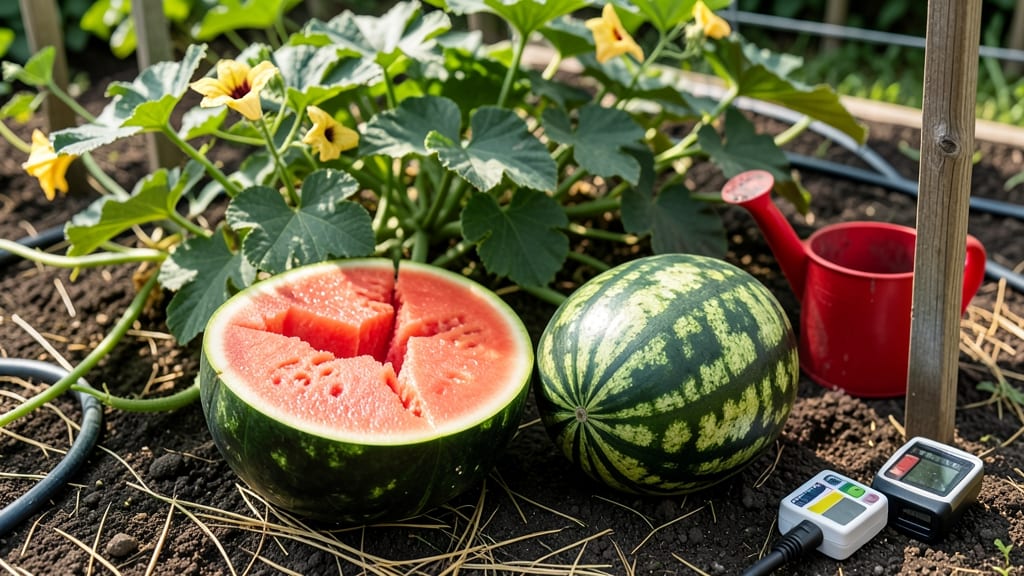
Your watermelon split because it absorbed water too quickly after drought stress, inconsistent soil moisture, or heavy rainfall. Overripe fruit or weak vine support can also trigger splitting. The best time to harvest is when the watermelon feels firm yet yields slightly to pressure.
Watermelons split when their outer rind can't handle the sudden expansion from rapid water intake. 🌱 Think of it like overfilling a balloon—once the pressure exceeds the material's limit, it cracks.
This often happens after periods of dry soil followed by sudden watering, or when vines can't properly anchor the growing fruit. Even mature melons with soft spots are prone to splitting because their structural integrity weakens over time.
To prevent this next season, focus on consistent soil moisture rather than heavy watering sessions.
I recommend harvesting when the tendril nearest the stem turns brown and the watermelon makes a hollow sound when tapped. Split-resistant varieties like 'Crimson Sweet' or 'Sugar Baby' also handle moisture fluctuations better than heirloom types.
💡 In This Article
- Watermelon Splitting: The Science Behind Moisture Stress
- Preventing Watermelon Splitting: Harvesting and Growing Tips
Watermelon splitting: the science behind moisture stress
Watermelon splitting happens when the fruit's outer rind can't contain the rapid expansion from water absorption. The watermelon's rind is made of tough, fibrous cells called sclerenchyma that provide structural support.
However, these cells have limits—when water enters too quickly, the fruit's internal pressure (called turgor pressure) exceeds the rind's elasticity, causing it to crack like an overinflated balloon. 💦 This is most common after drought stress, where the fruit's cells become dehydrated and then suddenly swell when water is reintroduced.
The science gets even more interesting when you consider watermelon anatomy. The rind contains a network of vascular bundles that transport water and nutrients. During drought, these bundles contract, reducing the fruit's ability to handle sudden expansion.
When water finally reaches the roots, it's absorbed at a rate that can overwhelm the rind's capacity—sometimes causing splits within 24-48 hours of heavy watering. Overwatering creates a similar effect by maintaining consistently high soil moisture, which keeps the fruit in a perpetual state of rapid growth.
Temperature plays a surprising role too. Watermelons grown in hot climates (above 85°F) often split more frequently because heat accelerates water evaporation from leaves, creating a cycle of dehydration and rapid rehydration. The fruit's growth rate also increases in warm weather, putting additional pressure on the rind.
Even mature watermelons with soft spots are vulnerable because their cell walls weaken over time, reducing the rind's ability to withstand internal pressure. 🌡️
Uneven soil moisture creates another splitting trigger. When one side of the watermelon receives more water than the other (common in sloped gardens or uneven irrigation), that side expands faster, creating internal stress that leads to cracks.
This is why professional growers use drip irrigation systems—delivering water consistently at the base of the plant prevents these moisture imbalances. The fruit's natural shape also matters: round varieties like 'Crimson Sweet' handle pressure better than elongated types that develop weak spots along their length.
Here's what's happening at the cellular level: As water enters the watermelon's cells, they swell through a process called osmosis. The cell walls stretch until they reach their maximum elasticity, at which point the rind's outer layer (the exocarp) can no longer contain the pressure.
This creates a visible split that often follows the natural grain of the rind fibers. The splits typically start at the blossom end (where the fruit attached to the vine) because this area has thinner cell walls designed for nutrient transport rather than structural support. 🌱
Interestingly, watermelon splitting isn't always bad news—it can actually indicate the fruit is ripe! However, the timing matters. Splits that occur when the watermelon is still firm suggest moisture stress, while splits in soft, mature fruit are more about overripeness.
The key is monitoring the fruit's development: a ripe watermelon should have a creamy yellow spot at the blossom end and make a hollow sound when tapped. This balance between firmness and ripeness is what prevents both under- and over-maturity splits.