
How To
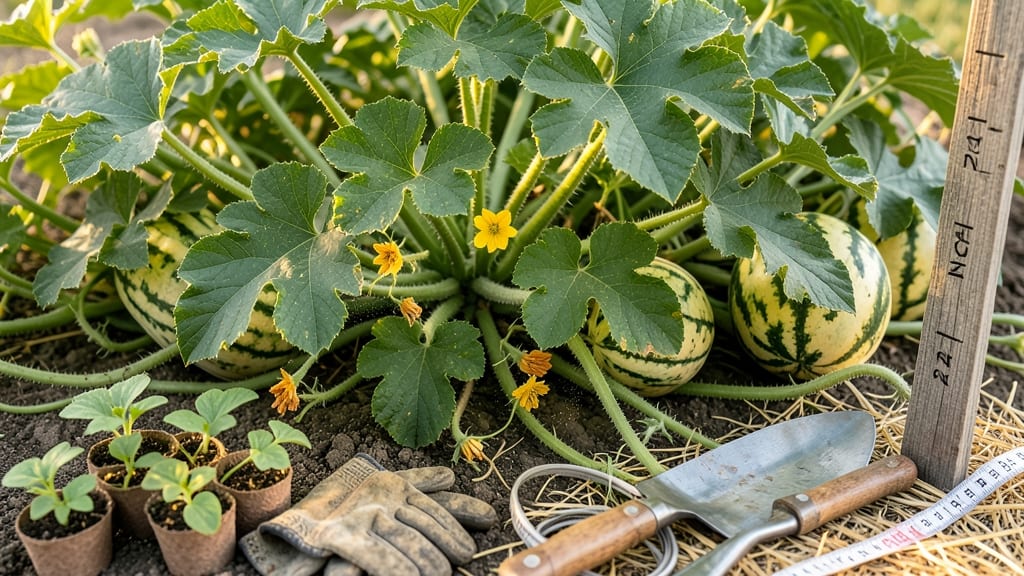
Watermelons should be planted 6 to 8 feet apart for vining varieties and 3 to 4 feet for bush types to maximize fruit size and yield.
Picture this: you’ve spent weeks nurturing your 🍉 plants, only to harvest tiny, underwhelming melons because they were crowded. That’s not just a missed harvest—it’s a lesson in how spacing directly impacts growth.
Too close, and your watermelons compete for nutrients and sunlight, stunting their potential. Too far, and you waste garden real estate that could be growing more fruit.
But here’s the twist: spacing isn’t one-size-fits-all. Soil fertility, climate, and even your garden layout play a role. In USDA Zone 6a, where summers can be hot and dry, wider spacing helps reduce disease pressure, while in rich, well-drained soil, you might get away with slightly closer plantings.
And if you’re working with limited space? Trellising can be a game-changer, letting you grow more in less room.
In this guide, I’ll break down the exact spacing rules for your favorite varieties, how to adjust for your unique conditions, and the three common mistakes that shrink watermelons—so you can finally grow the giants you’ve been dreaming of.
Optimal watermelon spacing by variety: vining vs. bush types
Watermelon spacing isn’t one-size-fits-all—it depends on whether you’re growing vining varieties like 'Crimson Sweet' or bush types such as 'Sugar Baby'. Vining watermelons spread aggressively (up to 10 feet), while bush varieties stay compact (3–4 feet).
Getting this wrong means smaller fruit or wasted garden space. Let’s break down the science-backed spacing for your favorite varieties.
For vining watermelons, the rule is simple: plant them 6–8 feet apart in rows spaced 5–6 feet apart. This gives their sprawling vines room to stretch without competing for nutrients.
Varieties like 'Charleston Gray' or 'Moon and Stars' thrive with this extra space, producing larger, sweeter fruit. Skimp on spacing, and you’ll end up with underdeveloped melons and higher disease risk.
On the other hand, bush watermelons are perfect for small gardens or containers. These compact plants—like 'Sugar Baby' or 'Black Diamond'—only need 3–4 feet between plants and 4–5 feet between rows.
Their shorter vines (typically 3–5 feet) make them ideal for raised beds or vertical trellising, where you can save space while still enjoying a bountiful harvest.
🌱
If you’re trellising watermelons, spacing changes dramatically. Bush varieties like 'Black Diamond' can be planted 3–4 feet apart vertically, saving up to 70% of ground space. Use a sturdy trellis or cage to support the vines, and prune side shoots to encourage upward growth.
Just remember: watermelons need sunlight, so avoid overcrowding even on trellises.
For raised beds, reduce spacing slightly—4–5 feet between plants for bush types—to maximize yield in limited space. The key is to thin seedlings early, keeping only the strongest plants. This prevents competition for water and nutrients, leading to larger, healthier fruit.
Pro tip: Use a soil thermometer to ensure soil is at least 70°F before planting—cold soil slows germination and stunts vine growth.
🌿
Not all watermelons are created equal when it comes to spacing. For example, 'Moon and Stars' (a vining type) needs 8 feet between plants to develop its iconic rind pattern, while 'Sugar Baby' (a bush type) thrives at 3 feet apart.
Always check the seed packet for variety-specific recommendations, but use the guidelines above as a starting point. Over time, you’ll learn how your local climate and soil type affect spacing needs—drier areas may need slightly wider gaps to reduce moisture competition.
One common mistake is assuming all watermelons need the same space. In reality, vining types can spread twice as far as bush varieties, so plan your garden layout accordingly.
If you’re short on space, opt for bush or trellised varieties like 'Tiny Tim' or 'Golden Midget', which stay under 3 feet tall and produce golf-ball-sized melons perfect for small gardens or containers.
🪴
For maximum yield, pair your
How to adjust spacing for soil, climate, and garden layout
Your watermelon plants need more than just sun and water—they rely on strategic spacing to thrive. Poor soil? Closer spacing forces roots to compete for nutrients, while hot climates demand wider gaps to prevent fungal diseases.
Even your garden layout plays a role: trellising can transform sprawling vines into vertical space-savers. Let’s break down how to tweak spacing for your unique conditions before you plant a single seed.
Start by assessing your soil quality. If your garden has nutrient-poor soil, plant watermelons 3–4 feet apart to encourage root competition for shared resources. This forces vines to grow stronger and deeper, accessing more nutrients.
For rich, well-amended soil, you can stretch spacing to 6–8 feet—giving each plant room to develop larger fruits without stealing from neighbors.
Climate matters just as much as soil. In hot, humid regions, increase spacing to 8–10 feet to improve airflow and reduce powdery mildew risk. Poor circulation traps moisture, creating the perfect breeding ground for fungal diseases.
Conversely, in cooler climates, you can reduce spacing to 4–5 feet since slower vine growth means less competition for space.
🌱 Watermelon Spacing Adjustments
| Condition | Spacing Adjustment | Why It Works |
|---|---|---|
| Poor Soil | 3–4 feet apart | Forces roots to compete for nutrients |
| Hot/Humid Climate | 8–10 feet apart | Improves airflow, reduces disease |
| Small Garden | Trellis vines vertically | Saves space, directs growth upward |
| Rich Soil | 6–8 feet apart | Allows larger fruit development |
💡 Pro Tip: Use a checklist before planting: test soil pH, check local climate zones, and sketch your garden layout to visualize spacing.
If you’re working with a small garden, vertical trellising is your best friend. Train vines upward using sturdy trellis frames or cattle panels, spacing plants 2–3 feet apart along the trellis.
This not only saves ground space but also improves fruit quality by reducing soil-borne diseases. Just be sure to use heavy-duty supports—watermelon vines can weigh 20+ pounds when laden with fruit!
Before you plant, run through this quick garden checklist: ☑️ Test your soil pH (ideal: 6.0–7.0) ☑️ Measure your garden’s sunlight exposure (full sun = 6+ hours) ☑️ Sketch a layout to visualize spacing ☑️ Choose companion plants (e.g., radishes or lettuce) for underplanting ☑️ Gather trellis materials if space is limited
Remember, spacing isn’t set in stone. Monitor your plants mid-season: if vines look crowded or leaves yellow, it’s time to thin or adjust supports. With the right spacing, you’ll go from store-bought watermelons to homegrown giants in no time. Happy planting! 🍉