
Plants
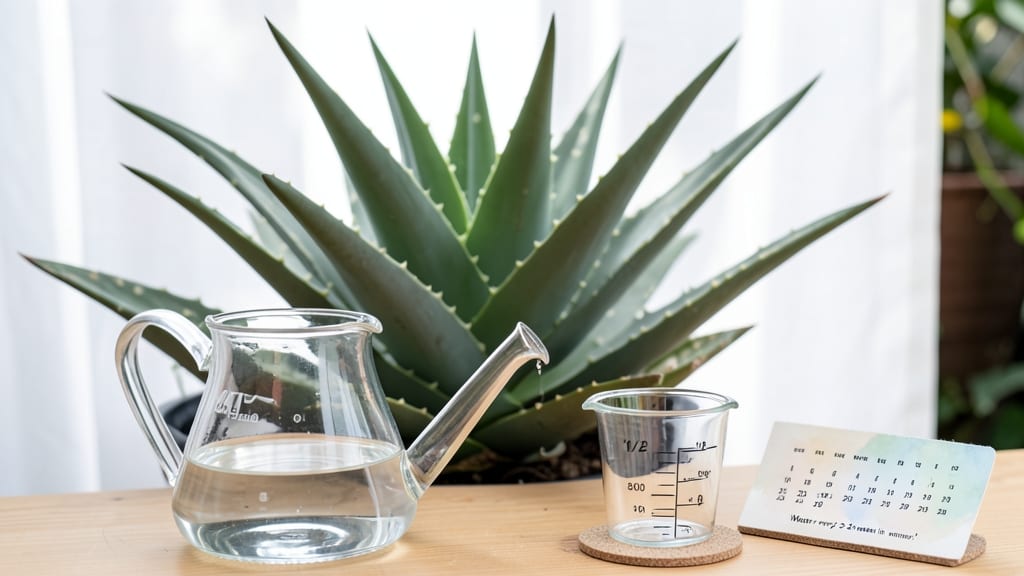
Watering an aloe vera plant every three weeks is the golden rule for keeping it thriving without risking root rot — and most people get this wrong by watering far too often.
Overwatering is the #1 killer of aloe vera plants 🌱, yet I’ve seen gardeners drown them by sticking to a weekly schedule, thinking more water equals faster growth. The truth? Aloe vera stores water in its leaves like a succulent, and too much moisture suffocates its roots.
This guide breaks down the 3-week watering rule, how to adjust for your climate, and the telltale signs your plant is thirsty or drowning. You’ll also learn why soil type, pot drainage, and even your local humidity play a bigger role than you’d expect.
By the end, you’ll know exactly when to water, how much to give, and what to watch for — so your aloe vera stays lush, healthy, and ready to harvest for years.
The 3-Week watering rule: how often to water aloe vera for optimal growth
Aloe vera thrives on neglect more than attention, and its 3-week watering rule reflects this natural resilience. As a succulent, aloe vera stores water in its thick leaves, making it uniquely adapted to drought conditions.
This means most gardeners overwater by instinct, thinking "more is better." The science behind this rule ties to aloe vera's CAM photosynthesis, which minimizes water loss during dry periods.
In my own garden, I’ve seen aloe vera plants survive months without water in well-draining soil, while others wither within weeks from soggy pots. The key lies in understanding your plant’s root environment and adjusting for your climate.
For example, a desert-dwelling aloe vera in Arizona might need water every 4-5 weeks, while one in humid Florida could require bi-weekly watering.
Here’s the golden rule: Water your aloe vera only when the top 2-3 inches of soil are completely dry. Stick your finger in the soil—if it feels dry, it’s time.
This method prevents the root rot that claims 80% of aloe vera casualties. For most indoor setups with standard potting mix, the 3-week interval works perfectly.
| Condition | Watering Frequency | Soil Check | Seasonal Adjustments |
|---|---|---|---|
| Indoor (Standard Light) | Every 3 weeks | Top 2-3" dry | Reduce winter watering |
| Outdoor (Summer Heat) | Every 1-2 weeks | Top 1-2" dry | Increase frequency |
| Humid Climate (e.g., Florida) | Every 2 weeks | Top 1-2" dry | Monitor for mold |
| Arid Climate (e.g., Arizona) | Every 4-5 weeks | Top 3-4" dry | Extend intervals |
| Newly Potted (First 3 Months) | Every 2 weeks | Top 1" dry | Encourage root growth |
To implement this rule, start by repotting your aloe vera in a container with drainage holes and a cactus/succulent mix. This combo ensures excess water escapes quickly. When watering, soak the soil until it drains from the bottom, then empty the saucer.
This mimics the natural rainfall patterns of its native habitat, where heavy rains are followed by long dry spells.
Seasonal changes demand adjustments. During winter months (November–February), reduce watering to every 4-6 weeks as growth slows. Conversely, in summer heat, increase frequency to every 1-2 weeks for outdoor plants.
My aloe vera in a sunny window still follows the 3-week rule but gets a quick check every 10 days to ensure soil isn’t drying out too fast.
Pot size matters too. A 6-inch pot holds less moisture than a 12-inch container, so larger pots can stretch watering intervals. For example, my 12-inch aloe vera goes 4 weeks between waterings, while a 6-inch one needs water every 3 weeks.
Always match pot size to your plant’s mature root system—overpotting retains too much moisture.
Extreme climates break the 3-week rule. In high humidity (e.g., rainforests or greenhouses), water every 2 weeks to prevent fungal issues. In freezing temperatures (below 40°F), halt watering entirely until spring.
I once kept an aloe vera outdoors through a Texas winter and saw zero growth until temperatures rose above 50°F—proof that aloe vera pauses activity in cold weather.
Pro tip: Pair this watering rule with a bright light source. Aloe vera needs 6+ hours of sunlight daily to photosynthesize efficiently, which directly impacts its water needs. Without enough light, your plant will signal thirst sooner, even if you’re sticking to the 3-week schedule.
Place yours near a south-facing window or under grow lights to maintain balance.
Remember, the 3-week rule is a starting point, not a rigid law. Observe your aloe vera’s leaf plumpness and growth rate—these are the best indicators of whether you’re nailing the watering balance.
With time, you’ll develop an intuition for when to adjust, ensuring your aloe vera stays lush, healthy, and ready for harvest. 🌱
Signs your aloe vera needs water (and when to adjust your schedule)
Aloe vera plants are succulents by nature, meaning they store water in their thick leaves. But even these drought-resistant plants will show clear signs when they're thirsty. The key is learning the difference between underwatering signals and overwatering symptoms—both can look alarming at first glance.
Start by checking the soil moisture with your finger. Stick your index finger about 1-2 inches deep into the soil. If it feels completely dry, your aloe vera is likely begging for water.
However, if the soil feels damp or you see water pooling at the bottom of the pot, you're watering too frequently. This simple test saves countless aloe plants from root rot every year.
✅ DO: Water When...
- Soil is bone-dry 1-2" deep
- Leaves pucker slightly (not severely)
- Plant feels light when lifted
- Bottom leaves turn yellow (early sign)
❌ DON'T: Water When...
- Soil still feels moist at 1" depth
- Leaves feel squishy or mushy
- Pot has drainage issues (no holes)
- Leaves develop brown spots (overwatering)
Your aloe vera's leaf appearance is the most reliable indicator. Healthy leaves should be plump and upright. When thirsty, the edges may curl slightly inward, almost like a question mark.
This is your plant's way of conserving moisture. However, if the leaves start yellowing at the tips or developing brown patches, you're likely overwatering.
Environmental factors play a huge role in adjusting your watering schedule. In hot, dry climates, aloe vera may need water every 10-14 days, while humid environments can stretch that to 3-4 weeks.
Also consider the pot size—smaller pots dry out faster than large containers. If your aloe is in a 6-inch pot, check soil moisture more frequently than if it's in a 12-inch container.
One often-overlooked sign is the plant's weight. Lift your aloe vera pot gently—if it feels unusually light, the roots have shrunk from lack of water. Conversely, if the pot feels heavy and soggy, you've been watering too much.
This tactile check takes just seconds but can prevent root rot before it starts.
Don't forget to rotate your plant occasionally so all sides get even sunlight exposure. Uneven light can cause some leaves to dry out while others remain overly hydrated, creating a false watering schedule.
Consistency in both light and water is key to keeping your aloe vera healthy and thriving year-round.
When in doubt, underwater slightly—aloe vera plants are far more forgiving of drought than they are of soggy roots. With practice, you'll develop an instinct for when your plant truly needs that next drink of water. 🌱