
Watering
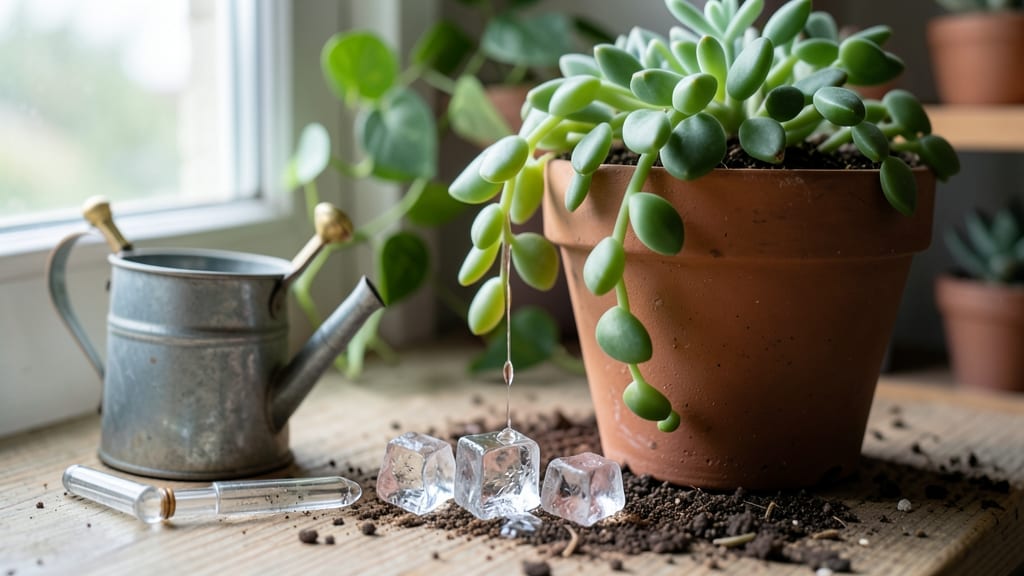
Using ice cubes to water plants works best for sensitive seedlings or tropical varieties, as the gradual melting prevents over-saturation while keeping roots undisturbed. However, this method falls short for most mature plants because it delivers uneven moisture and risks shocking roots with sudden temperature drops.
Ice cubes create a slow-release hydration system that mimics natural rainfall patterns, which is why gardeners swear by them for delicate young plants. 🌱 The slow melt prevents soil erosion and compaction that often comes with traditional watering, while the cool water can actually help reduce stress in heat-sensitive tropical plants.
That said, the limited coverage means you'll need to strategically place cubes near root zones or combine with occasional liquid watering for balanced soil moisture. For container plants, this method works beautifully during travel or when you're away for short periods.
What's fascinating is how this technique affects soil temperature dynamics. The gradual cooling from melting ice can temporarily lower soil temperatures by 5-10°F, which is particularly beneficial during summer heatwaves for plants like ferns or calatheas.
However, this same temperature shift can become problematic for cold-sensitive varieties if not monitored. The key is understanding your specific plants' temperature preferences—some tropicals actually thrive with this cooler watering approach, while others may show signs of stress if exposed too frequently.
💡 In This Article
- How Ice Cube Hydration Affects Root Systems and Soil
- Best Plants and Scenarios for Ice Cube Watering
How ice cube hydration affects root systems and soil
The slow-melting nature of ice cubes creates a unique hydration process that differs significantly from traditional watering methods. When ice melts, it releases water at a controlled rate of about 1-2 milliliters per minute per cube, depending on ambient temperature.
This gradual delivery prevents sudden soil saturation that can displace delicate root structures, particularly important for seedlings with shallow root systems. The process mimics natural rainfall patterns where water penetrates soil slowly, allowing roots to absorb moisture without stress.
Root systems respond differently to temperature changes than most gardeners realize. While cool water from melting ice can be beneficial for tropical plants that prefer 65-75°F soil temperatures, it may cause shock in cold-sensitive varieties like tomatoes or peppers.
The temperature drop from 32°F ice to room temperature soil can temporarily lower root zone temperatures by 5-10°F, which may trigger stress responses in some plants. This is why ice watering works best for plants accustomed to cooler conditions, like ferns or calatheas, rather than heat-loving desert succulents.
The soil moisture dynamics change dramatically with ice watering compared to liquid water. Ice cubes create localized hydration zones that may leave surrounding soil dry, particularly in larger containers. This uneven moisture distribution can lead to root competition if not managed properly.
The cooling effect also temporarily alters soil microbial activity - beneficial bacteria and fungi may become less active in the 50-55°F range created by melting ice, potentially slowing nutrient cycling in the short term.
One often-overlooked risk is potential fungal growth in the cooler, moist microclimate created around melting ice. While the gradual watering reduces surface evaporation that promotes fungal spores, the consistently damp conditions near the ice can become ideal for pathogens like Pythium.
This is particularly concerning for seedlings where fungal infections can be devastating. The key is to use ice cubes strategically - placing them near (but not directly on) root zones while maintaining good air circulation around the plant.
Soil texture plays a crucial role in how effective ice watering becomes. In sandy soils with large particles, ice cubes may melt too quickly (5-10 minutes in summer heat), providing little benefit over regular watering.
Conversely, in clay or loam soils, the melting process can last 30-60 minutes, creating more sustained moisture. This is why ice watering shows its greatest benefits in well-draining potting mixes where you can control the soil composition.
What most gardeners don't realize is how ice watering affects soil structure over time. The repeated freezing and thawing cycles from melting ice can actually improve soil aeration in compacted soils by creating tiny air pockets as ice crystals form and melt.
However, this benefit requires consistent use and works best in container gardening where you have control over the soil mix. For in-ground planting, the temperature fluctuations may be too extreme for this structural improvement to be meaningful.